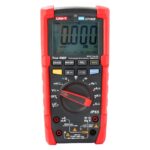
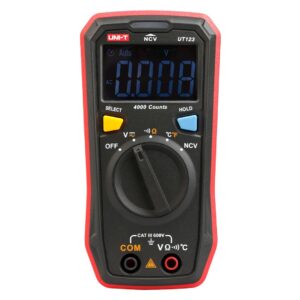
What makes this multimeter different from a standard multimeter?
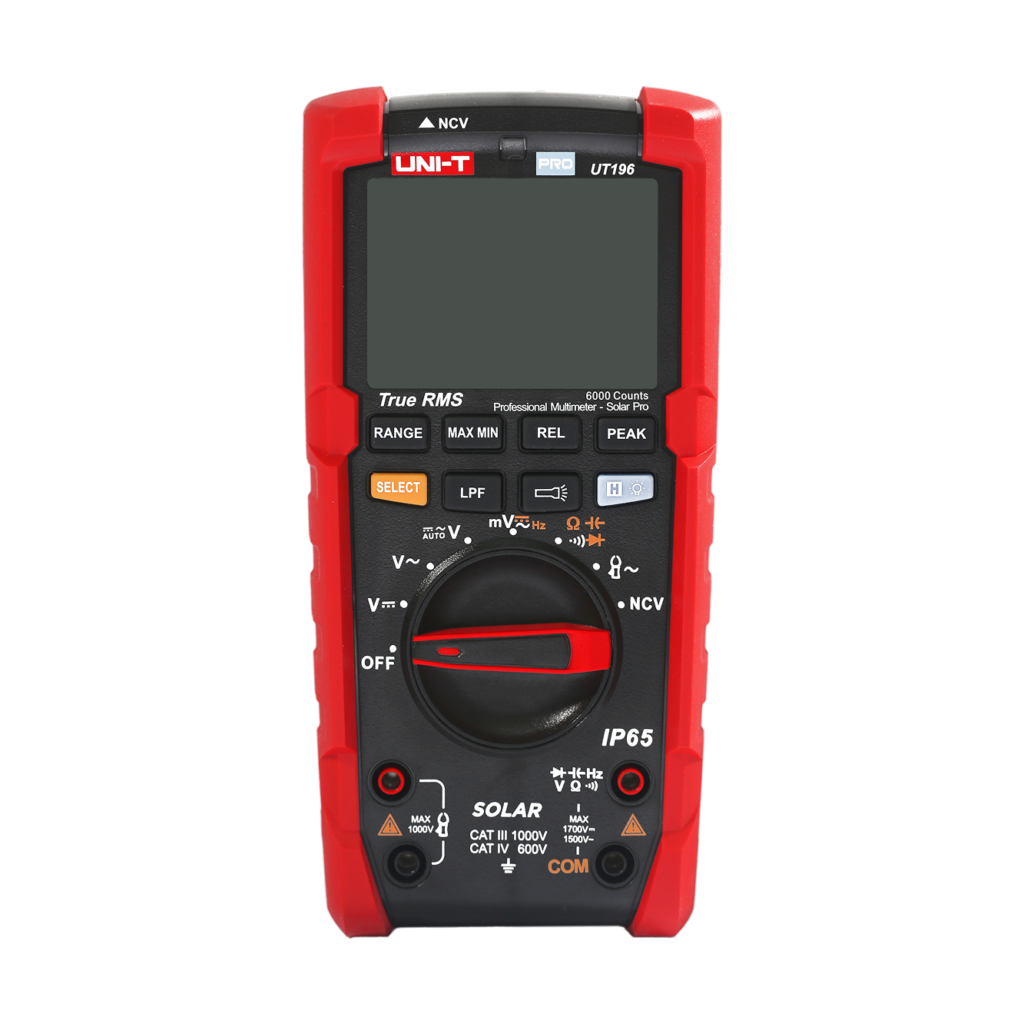
This meter combines True RMS measurement, an extended voltage range (up to 1700V DC and 1500V AC), IP65 dust and water protection, and a low-pass filter — features typically found only on high-end industrial meters. It’s designed for demanding environments like solar farms, wind installations, and industrial plants.
What does True RMS mean, and why does it matter?
True RMS (Root Mean Square) measures the actual effective value of an AC signal, including distorted or non-sinusoidal waveforms. Standard average-responding meters can read significantly low on signals from variable frequency drives (VFDs), switch-mode power supplies, and modern electronics. True RMS ensures accurate readings on these real-world signals.
Can it really measure 1700V DC?
Yes. The meter measures up to 1700V DC and 1500V AC, making it suitable for high-voltage applications such as solar array testing, wind turbine systems, and EV/battery infrastructure, where string voltages often exceed 1000V.
What is the frequency response range?
45Hz to 1kHz. This covers standard 50/60Hz mains power as well as many variable-speed drive outputs.
What safety category ratings does it have?
It is rated CAT III 1000V and CAT IV 600V, meaning it’s approved for measurements at the distribution level, including permanently installed equipment, three-phase circuits, and building-level distribution panels.
What does IP65 protection mean?
IP65 means the meter is dust-tight (6) and protected against low-pressure water jets from any direction (5). It can withstand rain, washdowns, and dusty jobsite conditions.
Is it safe to use on live high-voltage circuits?
With CAT III 1000V / CAT IV 600V ratings, it’s built for high-energy environments. Always verify the meter’s category rating matches the installation you’re testing, inspect leads and fuses before use, and follow standard electrical safety procedures.
What is the low-pass filter (LPF) function for?
The low-pass filter blocks high-frequency noise and harmonics above roughly 1kHz, allowing accurate measurement of the fundamental voltage on VFD and inverter outputs. Without it, high-frequency switching noise can cause unstable or inflated readings.
What does low impedance (LoZ) mode do?
Low impedance mode places a lower input resistance on the meter (typically a few kΩ), which bleeds off ghost or induced voltages caused by capacitive coupling in long or adjacent cable runs. This gives you a “real” reading instead of a phantom voltage.
What is the analog bar for?
The analog bar graph shows fast-changing or fluctuating signals that digits alone can’t capture, helping you spot trends, instability, and intermittent faults at a glance.
Does it have any features for working in dark areas?
Yes. It includes a built-in flashlight, a bright display backlight, and a visual alarm to keep you informed and safe when working in dim electrical rooms, cabinets, or outdoor sites at night.